Want to save money as a renter? Don’t cheap out on these 5 things
But determining when saving is truly worth it is an important part of managing your money. While some deals do save you cash upfront, you might find yourself spending more money in the long run than if you’d paid in full. Sometimes, a lowball price tag isn’t actually that great for your overall financial goals.
If you’re a renter, you might be frugal with certain items, or go without them, to save a few dollars. Here are the times when it’s not really worth it to aim for a bargain.
Not buying tenant insurance
If you’re an inexperienced renter (say, a post-secondary student), you’re on a tight budget or you just don’t like paying for something intangible, you might be tempted to forgo tenant insurance.
Tenant insurance (sometimes called renter’s insurance) isn’t legally required in Canada, it’s completely necessary to keep your finances intact. Why? It protects against three things that can cost you big-time in the long run: replacing your personal items, paying for property damage and being sued if a visitor suffers an injury at your home. That means if, say, your new laptop gets stolen from your place or you accidentally flood the bathroom and destroy the flooring, tenant insurance would cover the cost of replacing your computer or repairing the damage. Plus, if a friend slips and gets injured in your home and decides to take legal action, tenant insurance would cover your legal fees. While hopefully you will never need to use your tenant insurance coverage, it’s worth buying for peace of mind. The premiums usually range from $15 to $50 per month—so, not that much more than your Netflix subscription—and not having it could wind up costing you thousands.
Purchasing low-quality furniture
Furnishing your place can be fun—but costly. According to FurnitureBank.org, it can cost $8,353 to fully furnish a one-bedroom apartment, including taxes, delivery and assembly fees. Before you head to the nearest Ikea to pick out low-priced furniture, though, consider that buying cheap essentials may cost you more in the long run. In fact, The Spruce estimates that a cheaper, poorly made couch may only last 10 years, while a better-quality couch could last up to 25 years.
If you’re looking for longevity, choose a classic style that won’t go out of fashion in a few years’ time. In terms of function, look at the materials. You’ll want wooden frames, not softer, less durable materials like particleboard. So, while an Ikea sofa made of particleboard may cost under $500, a sofa with a wooden frame will last you far longer—and probably save you some backaches.
But if you can’t afford to fork out a few grand for a high-quality couch or mattress, that’s understandable—no one is telling you to take on debt for a fancy couch. But aim to spend the most you can afford on a couch you’ll love and that will keep its shape for years. Facebook Marketplace and Kijiji, estate and garage sales, and putting the word out to relatives for hand-me-downs are great ways to find quality furniture for cheap or even free. (And never underestimate the power of reupholstery.) Hopefully, your efforts will pay off, and your future self’s bank account will thank you.
Not bothering to decorate your space
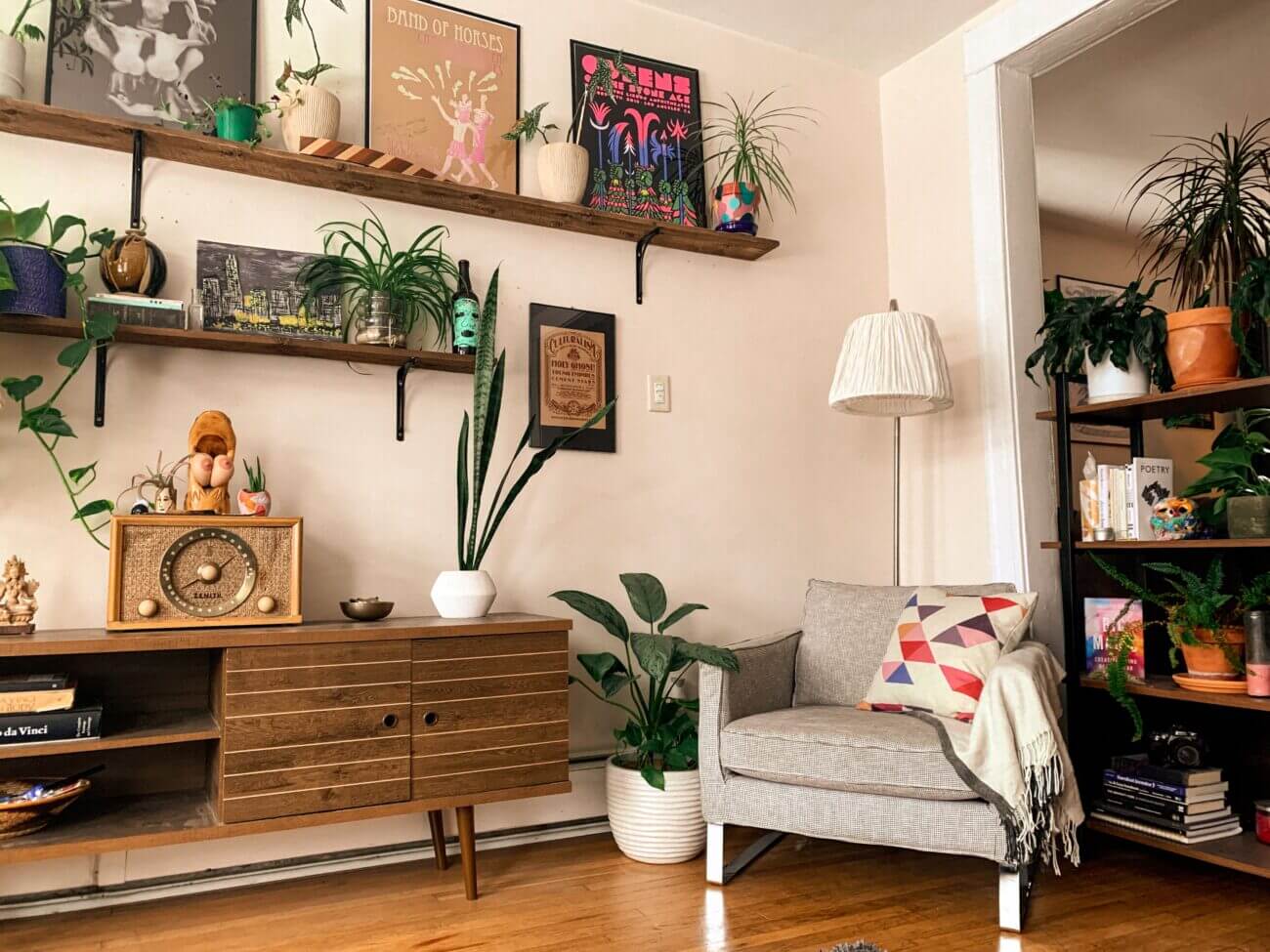
It might seem counterintuitive to saving money, but skimping on the things that make your home feel like just that can cost you. Shannon Lee Simmons, financial advisor and owner of the New School of Finance, recommends painting and decorating—even if they don’t technically add any “value” to your apartment. “This is an important emotional return on investment,” she says. “I find that people who love the place [where] they live are happier on a day-to-day basis and have a more hopeful outlook.” Simmons explains that having a hopeful mindset matters: “When we are hopeful, we make growth-based decisions versus scarcity decisions all the time. Something as simple as painting can make a big difference.”